Website development goes best when you know upfront what the site needs to deliver. Do you want more enquiries, fewer calls asking the same questions, or a better first impression? That goal shapes almost every choice that follows.
This article covers the steps you go through, what you prepare yourself and what to look for when you choose a web designer. That way you know what to expect and avoid costly detours.
Why have a website built instead of building it yourself?
With a website builder you can get something online in a weekend. For a hobby or a first test, that's fine. For a business that wants to win customers, you often hit limits. The site loads slowly, looks like a thousand others and is hard to find on Google.
When a professional builds your website, you get something that fits your customers and the way you work. Think of a quote form that asks exactly the right questions, or a page for each region you cover. Technical things like speed, security and findability are also sorted from the start.
Building it yourself also takes time. Hours you could spend on customers. So don't just count in euros, count in hours too.
What to prepare before website development starts
The better you prepare, the faster and cheaper the project. You don't need to write a technical plan. A few clear answers are enough:
- What's the main goal? For example more quote requests, bookings or orders.
- Who is your ideal customer, and what do they want to know before they get in touch?
- Which pages do you need? A list with services, about you, prices and contact is a good start.
- Which features do you need? Think of a booking button, a form or a client portal.
- Which websites do you like, and why? That says more than "modern and clean".
- Do you already have a logo, brand style, photos and copy? Or do they still need to be made?
Copy is often the biggest delay. So start on it early. Our article on writing website copy explains how to tackle it.
The steps of a website project
A good project usually follows the same order. That way you always know where you stand:
- Introduction: you discuss goals, audience, wishes and budget.
- Proposal and price: you get a clear overview of what will be built and what it costs.
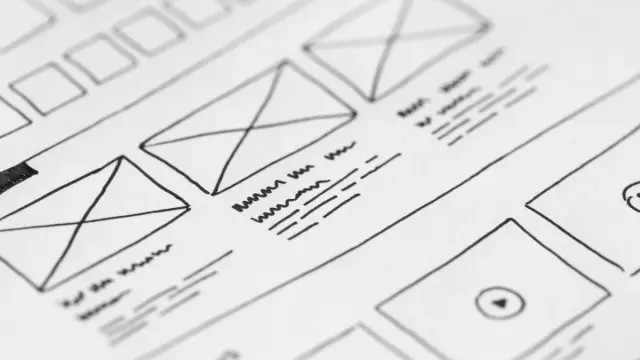
- Structure: which pages will there be, and how do they link together? This is also called the sitemap.
- Design: first the homepage and a few key pages. You give feedback before anything is built.
- Build: the design becomes a working site that works well on mobile, tablet and desktop.
- Content: copy and images go in, with attention to findability.
- Testing: forms, speed, links and how it looks on different screens.
- Launch and walkthrough: the site goes live and you learn how to edit copy yourself.
How long this takes depends on the size of the project and on how quickly copy and feedback are ready. A simple business site is usually quicker than a site with custom features or several languages.
What to look for when you choose a web designer
Lots of companies build websites. The differences rarely show in the first conversation, but they do show in what happens afterwards. So look at these points:
- Look at previous work. Do those sites suit your kind of business, and do they work well on your phone?
- Ask what exactly is included in the price. Design, build, basic SEO, a CMS and a walkthrough are usually part of it.
- Ask who owns the site, the domain and the copy. That should be you.
- Ask how maintenance and updates are handled after launch.
- Notice how well they listen. Someone who asks follow-up questions about your customers usually builds a better site.
Torn between a standard system and a custom site? Read WordPress or a custom website, where we compare the pros and cons side by side.
How much does website development cost?
The price depends on the number of pages, the design, the features and who writes the copy. A simple site with a few pages costs less than a site with a booking system, several languages or a link to your scheduling.
When comparing quotes, don't just look at the total. Also ask about costs after launch, such as hosting, maintenance and updates. A cheap site you have to rebuild in two years ends up being expensive. You'll find a full breakdown of prices in our article what website development costs.
Common mistakes with a new website
Many business owners run into the same problems. This list helps you avoid most of them:
- Wanting too much in version one. Start with what you really need and expand later.
- No clear action on each page. A visitor should always know what the next step is.
- Copy about yourself instead of the customer. Write about the problem you solve.
- Forgetting mobile. Many visitors arrive on their phone, so test there first.
- Ignoring speed. Large photos and heavy plugins make a site slow, and that costs you visitors.
- No plan for after launch. A site needs updates, backups and fresh content now and then.
Website development with Violexa
At Violexa we build custom websites for small and growing businesses across the Netherlands, from Amsterdam. You deal directly with Hisham, the founder, who guides your project from start to finish.
A custom website or web application starts from €1,799 excl. VAT (€2,177 incl. VAT) per project. That includes the design, the build, a design that works on every screen, basic SEO and Google Analytics, a CMS connection and a walkthrough so you can get going yourself. Larger projects get a fixed price upfront, in writing. Want to know more? See our websites and apps service.
A real example: for Rijschool Benz in Den Helder we built a site where you can request a trial lesson in 30 seconds, with lesson packages, a comparison with other driving schools in town and a student portal, in Dutch, English and Arabic. You'll find more projects in our work.
Want to know what your website needs? Book a free quickscan. It's a 30-minute conversation, online or on site. Afterwards you get short written advice with a price indication, with no obligation.
Frequently asked questions
How long does website development take?
That depends on the size of the project and on how quickly copy, photos and feedback are ready. A simple business site is usually quicker than a site with custom features or several languages. Ask the developer for a schedule with clear steps upfront.
What do I need to sort out before I have a website built?
Decide the goal of the site, your ideal customer and the pages you need. Gather your logo, photos and examples of sites you like. Start on the copy early, as that often causes the biggest delays.
Do I own my website if I have it built?
You should, but it isn't always automatically in the agreement. Ask upfront who owns the domain, the copy, the design and the code. Put this in the quote or contract.
Can I edit the copy myself after launch?
With most websites, yes, through a CMS. That's a content management system where you change copy and photos without code. Ask whether you'll get a walkthrough at handover, so you can get started straight away.