
How does the software development process work? In short, in six steps: getting your idea clear, recording the requirements, designing, building in small parts, testing and going live. After that comes management and further development. Each step has a clear goal, and in each one you as the client have a role.
Many business owners are having software built for the first time and don't really know what to expect. That leads to uncertainty about planning, costs and what's being asked of them. In this article we walk through the phases of software development, so you know what happens and how you can contribute to a good result.
Step 1: getting the problem and the goal clear
Good software doesn't start with features, but with a problem. What's going wrong now, what does that cost, and what do you want to be different afterwards? A clear goal helps with every choice that follows.
- What's the problem, in one or two sentences?
- Who will use the software? Staff, customers, or both?
- How is it solved now, for example with Excel, email or paper?
- When is the project a success? Think of hours saved or errors that disappear.
Sometimes this step shows you don't need custom software and an existing package will do. That's a good outcome too. Read more in custom or off-the-shelf software.
Step 2: recording the requirements
In this step you write down what the software needs to do. That can be in a functional design: a document describing which screens there are, who's allowed to do what and which rules apply. For smaller projects a clear list of requirements is often enough.
A handy approach is a short sentence per requirement: 'As a planner I want to drag jobs around, so I can quickly reshuffle when someone is ill.' That makes it clear who needs it and why. Then divide the requirements into needed now, nice to have and later. How to put such a document together is covered in writing a functional design.
After this step a developer can make a good estimate of time and cost. Without recorded requirements, every price is a guess.
Step 3: design and prototype
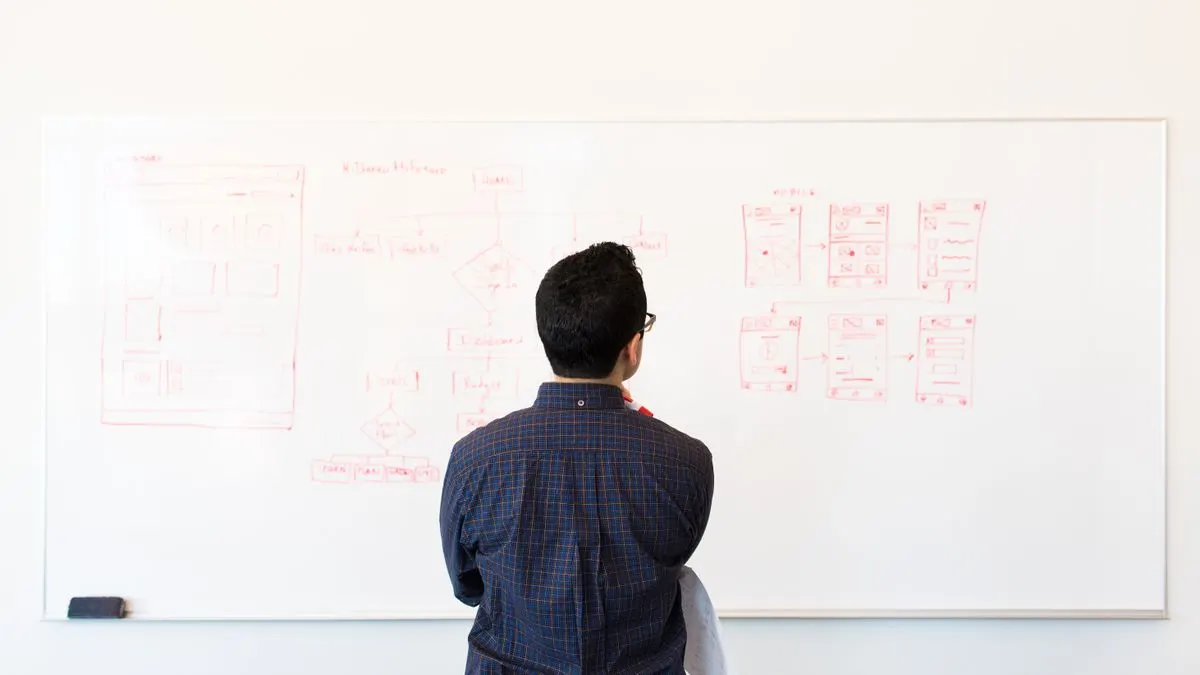
Before any code is written, it's decided how the software looks and works. First with simple sketches of the screens, then with a detailed design. Sometimes a clickable prototype is made: a design you can click through as if it already works.
This is the cheapest moment to change things. Adjusting a screen in a design takes minutes. Making the same change in built software takes much more time. So take the time to review designs properly, and show them to the people who will be working with them.
Step 4: building in small steps
Modern software development usually happens in short rounds of one or two weeks. This is called agile working. After each round there's a piece of working software you can look at and try out. That way you see the product grow and can adjust course in time.
- The benefit: you don't have to wait months to see whether it's going well.
- You can shift priorities if you learn something new along the way.
- Problems come to light early, when they're still easy to fix.
Your role in this phase: giving feedback and answering questions on time. A project is often delayed not by the building itself, but by waiting for answers or test data. So agree up front who makes decisions on your side and how quickly.
Also ask for access to a test environment. That's a separate version of the software where you can try everything out without touching real data. That way you can check progress yourself in between, instead of waiting for a demo.
Step 5: testing and going live
During the build, the developer continuously tests whether everything works technically. But the most important test is yours: does it work the way you want to work in practice? Use real situations and real data for that, not made-up examples.
- Run through the most important tasks from start to finish.
- Try exceptions too: a customer without an email address, a cancelled order, a duplicate entry.
- Have a few end users test it who weren't involved in the project.
- Check security and permissions: does everyone only see what they're allowed to see?
- Transfer data from old systems and spot-check it.
Going live ideally happens at a quiet moment, with a clear plan for the first few days. Make sure users have been given an explanation and know who to go to with questions.
Step 6: management and further development
Software is never completely finished. After launch come questions, small improvements and new wishes. On top of that, the software has to stay secure and up to date. Think of updates to underlying components, backups and monitoring that it keeps running.
Further development works best in the same way as the build: a list of wishes, in order of importance, and small steps. That way the software grows with your business, without you having to start a big new project every time.
Agree up front how this is arranged: who responds to outages, how quickly, and what it costs. If you want to know in advance what software costs in total, including management, read what a web application costs.
Having software developed by Violexa
At Violexa we build custom web applications and software following these steps. Violexa is a small studio with founder Hisham, based in Amsterdam, working for businesses across the Netherlands. You have one point of contact: the person who also designs and builds.
A custom web application starts from €1,799 excl. VAT (€2,177 incl. VAT) per project, including design, development, CMS connection and a walkthrough. Larger projects get a fixed price in writing up front. After delivery you can choose a maintenance plan: Silver €179 excl. VAT (€217 incl. VAT), Gold €299 excl. VAT (€362 incl. VAT) or Platinum €699 excl. VAT (€846 incl. VAT) per month.
Just starting out and want to know what the first step is? Request a free quickscan. In 30 minutes, online or on site, we discuss your idea. Afterwards you get short written advice with a price indication, with no obligation.
Frequently asked questions
How long does software development take on average?
That depends heavily on the size. A small web application with a few screens is often ready in a few weeks. Larger systems with many roles and integrations take a few months. Tight scoping and quick feedback help most to keep up the pace.
What is agile working in software?
Agile working means software is built in short rounds of one or two weeks. After each round there's something working to look at. That way you can adjust along the way instead of only seeing what's been made at the end.
What do I need to do myself when having software developed?
You describe the problem and your requirements, review designs, give feedback on time and test with real situations. Also agree who makes decisions on your side. That prevents delays.
How does the software development process continue after launch?
After launch comes management: updates, backups, security and resolving questions. New wishes often come up too, which you add step by step. Agree up front how maintenance is arranged and what it costs.