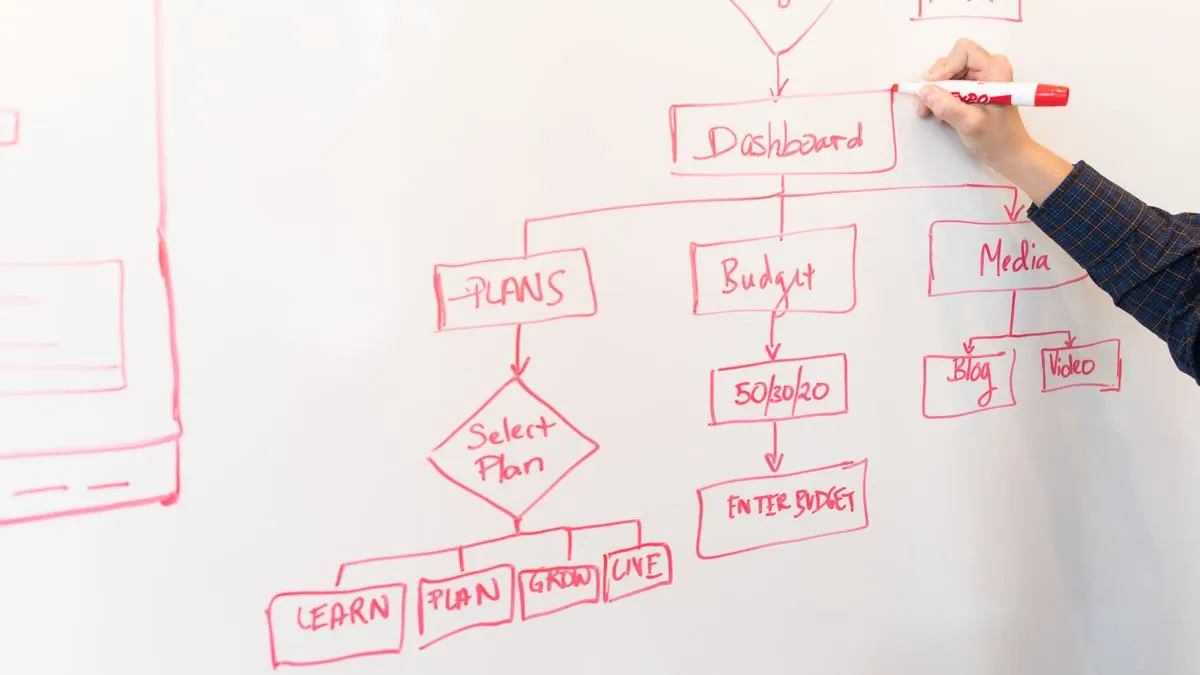

A digital strategy for small businesses is a short plan that sets out what you want to achieve online, with whom, through which channels and on what budget. It makes your website, Google, social media and email work together instead of each doing their own thing.
Many business owners already do all sorts of things online, but without direction. There's the odd post, the odd ad, and the website has been sitting there for years. A strategy makes choices: what you do, what you leave, and how you know whether it works.
What a digital strategy is, and what it isn't
A digital strategy isn't a list of tools or a social media schedule. It's the answer to a few questions:
- What should online deliver for your business? Think of enquiries, bookings, orders or job applications.
- Who do you want to reach, and where do those people search?
- Which channels will you use, and why those?
- What can it cost, in money and in time?
- How will you measure whether it works?
A strategy also isn't the same as a marketing plan. The strategy is the direction for a year or more. A marketing plan turns that direction into actions per month or quarter. And digital transformation, reorganising your internal processes, is another topic again. You can read more about that in digital transformation for small businesses.
Step 1: set your digital goals
Start with your business goal, not with online. Do you want more customers in a particular region, a higher order value, less dependence on one big client? Then translate that into an online goal you can measure.
- Bad goal: more visibility.
- Better goal: more quote requests through the website.
- Good goal: from ten to twenty quote requests a month through the website, within twelve months.
Choose one or two main goals. More goals at once usually means you don't hit any of them properly.
An example. An installation company wants more maintenance contracts instead of one-off jobs. The online goal then becomes: more maintenance enquiries through the website, and more existing customers signing a contract after a repair. That immediately decides which pages, ads and emails you need.
Step 2: know your audience and their customer journey
Your audience decides which channels work. A plumber gets found the moment there's a leak, so through Google. A beauty salon gets discovered through Instagram and chosen based on reviews. A business service provider is often found through LinkedIn and referrals.
Sketch the customer journey: how does someone first come across you, what do they compare, and what finally makes them get in touch? Also just ask a few existing customers. Their answers are often surprisingly useful.
Step 3: choose the channels for your online strategy
You don't have to be everywhere. Choose the channels that fit your goal and your audience, and do those well. A quick overview:
- Website: the foundation. This is where all channels come together and where someone gets in touch.
- SEO: being found in Google without paying per click. It takes longer, but it builds up.
- Google Ads: instantly visible for searches with buying intent. You pay per click.
- Google Business Profile and reviews: important for local businesses.
- Social media: good for brand awareness and trust, especially for visual or personal services.
- Email: to get existing customers to come back.
Better to start with two channels you keep up properly than six that half work. Local businesses often get the most out of their website, local SEO and Google Business Profile. Businesses that sell nationally usually benefit more from content SEO, Google Ads and email. Only add a new channel once the previous one is running and you can see what it delivers.
Torn between paying for visibility and investing in organic traffic? Read SEO or Google Ads.
Step 4: divide your budget and time
A strategy without a budget is just a wish list. Decide what you want to invest each month, and also how many hours you or your team can spend yourselves. Be honest about that time. A social media plan of five posts a week looks great, but if nobody has the time, it grinds to a halt after a month.
A handy split is to get the basics right first, such as a fast website that converts and a good Google Business Profile. Only then do you invest in traffic. Sending ads to a poor website is throwing money away.
Step 5: measure, learn and adjust
For each goal, choose a few figures you look at every month. These are also called KPIs (key figures). Examples:
- Number of enquiries, bookings or orders through the website.
- Where those enquiries come from: Google, ads, social, direct.
- Cost per enquiry for ads.
- The number of reviews and your average rating.
Make sure you can actually see those figures. Set up Google Analytics properly, track form submissions and phone clicks as conversions, and ask new customers how they found you. Without measurement you go on gut feeling, and that often turns out to be wrong. You can read how to set that up in conversion tracking.
Put a fixed time in your diary, for example the first Monday of the month. Look at what works, stop what doesn't and move budget across. A strategy isn't a document you write once, but something you hold up against the numbers every quarter.
Your digital strategy on one page
For most small businesses, the whole strategy fits on one page. Use this outline:
- Business goal for the coming year.
- One or two measurable online goals.
- Who your audience is, in two sentences.
- Two to four channels, with the reason why.
- Budget per month and hours per week.
- Three figures you look at every month.
- What you'll tackle first this quarter.
Help with your digital strategy from Violexa
At Violexa we help business owners make choices and carry them out. With online marketing we use SEO, Google Ads and social media, aimed at your goals. It starts from €599 per month excl. VAT (€725 incl. VAT), with no minimum term and cancellable monthly with one month's notice. If your website isn't ready for more traffic yet, we look at that first.
Want to work out your strategy together? Book a free quickscan. In 30 minutes, online or on site, we discuss where you stand and what the logical next step is. Afterwards you get brief written advice with a price indication, with no obligation.
Frequently asked questions
What is a digital strategy for small businesses?
It's a short plan that sets out what you want to achieve online, with whom, through which channels and on what budget. It makes your website, Google, social media and email serve the same goal. For most small businesses it fits on one page.
What is the difference between a digital strategy and a marketing plan?
The strategy gives the direction: goals, audience, channels and budget for a year or more. The marketing plan turns that into concrete actions per month or quarter. You start with the strategy.
How much budget do I need for online marketing?
That depends on your goal, your market and the channels you choose. Start with the basics, such as a good website and Google Business Profile, then spread budget over one or two channels. Measure what it delivers each month and adjust.
How often should I adjust my online strategy?
Look at your key figures monthly and adjust small things. Revisit the big choices, such as channels and budget, every quarter. A full review once a year is usually enough.