
A painter and decorator website has to reassure a customer quickly: this business works tidily, keeps its promises and delivers a crisp finish. From a distance, one paint job looks much like another. That's why people often choose on trust. Your website is where you build that trust, before you're even on someone's doorstep.
This article covers what a painter's site should include, how to show your work is good, how to make smart use of the outdoor season and how to get better quote requests. It works for a self-employed painter (zzp'er) and for a painting company with a small team.
What should a painter and decorator website include?
- A homepage that says what you do and which region you work in.
- Separate pages for interior painting, exterior painting, wood rot repair and possibly wallpapering or spray painting.
- Business services if you offer them, such as maintenance for owners' associations (VvE) or commercial buildings.
- A projects page with your own photos.
- How you work: survey, quote, scheduling, the job itself and handover.
- Information about your guarantee and which paint you use.
- Reviews and a clear quote form.
Private and business customers search differently. A board member of an owners' association wants a multi-year plan and a fixed point of contact. A homeowner wants to know when you can start. If you have both kinds of customer, give each their own page.
Building trust with your painter website
A painter works in and around the customer's home. People want to know who's coming. These parts often make the difference:
- Photos of yourself and your team, in work clothes, on a real job.
- Before-and-after photos, such as a weathered window frame and the same frame after the work.
- A clear guarantee, explained in plain language.
- An explanation of how you protect the home: masking, covering, tidying up at the end of the day.
- Reviews with name and town, with the customer's permission.
- Quality marks or memberships you really have, with a short explanation of what they mean.
Close-ups work well for paintwork. A crisp line between wall and ceiling or a smooth, glossy window frame shows craftsmanship. That says more than a wide shot of a whole facade.
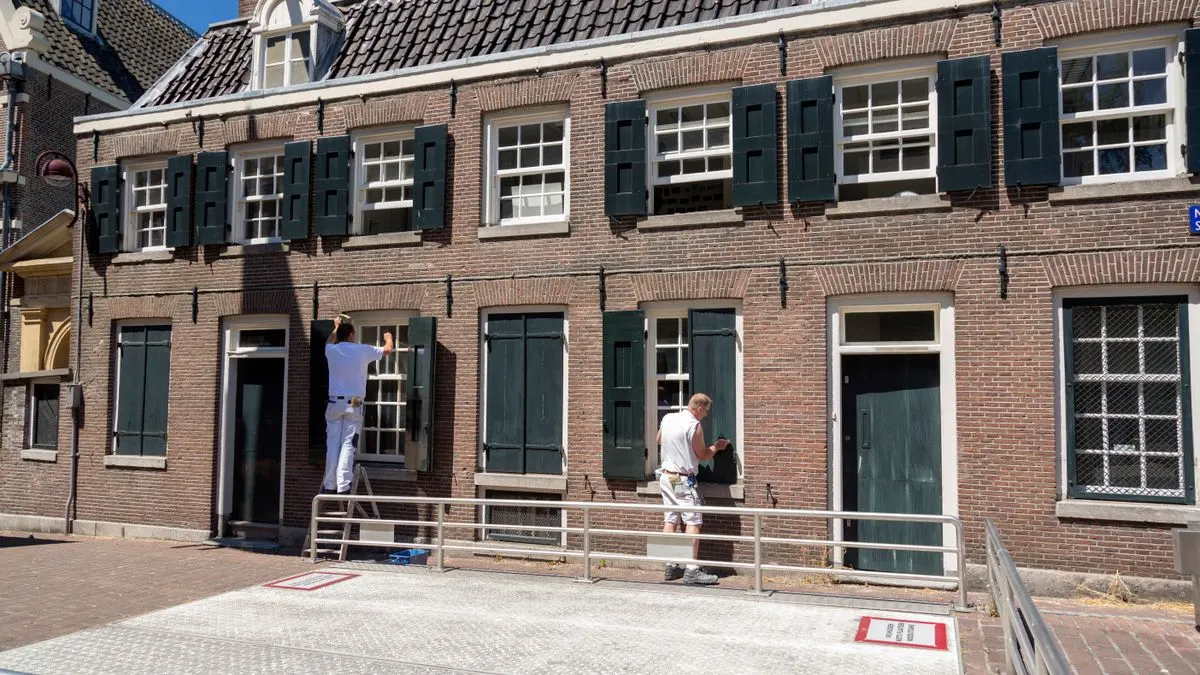
Making the most of the exterior painting season
Exterior painting is mostly done in the drier, warmer months. Many customers only think about it once spring arrives, when your schedule is already full. Your website can help spread that demand more evenly.
- Show in winter that customers can book exterior painting for the spring now.
- Promote interior painting in the cold months, when working outside is difficult.
- Be honest about when you next have space. That prevents disappointed enquiries.
- Write a short explanation of how often exterior paintwork needs doing. That answers a question many people ask Google.
Good quote requests for painting work
A request like 'please give me a price for painting' costs you a visit, when sometimes you already know it isn't a fit. A few questions upfront get you requests you can act on straight away.
- Inside, outside or both?
- What needs doing: window frames, facade, walls, ceilings, doors?
- The type of home, such as terraced, end-of-terrace or detached.
- A few photos of the current situation.
- Preferred timing and contact details.
With photos you can often already spot wood rot or old layers of paint that need extra work. That way you make a better estimate and avoid surprises. Read more about forms that work in our tips for a contact form.
Prices on a painter's website: yes or no?
Many painters don't put prices on their site, because every job is different. That's understandable. But visitors do want to know what ballpark they should be thinking in. Without any indication, some drop off, or request quotes from three companies at once.
A middle ground often works well. Explain what the price depends on:
- The condition of the wood and how much wood rot needs repairing.
- The number of coats and the type of paint.
- Height and access, for example whether scaffolding or a cherry picker is needed.
- Whether it's one window frame or a whole house.
Consider giving a starting price for a common job, such as an interior wall or a front door. That way the customer knows where they stand, and you get fewer requests from people with a very different budget in mind.
Getting found as a painter in your region
Most customers search for 'painter' plus their town. So for a painting company, local findability matters more than ranking nationally. The basics:
- A complete Google Business Profile with your service area, opening hours and photos of projects.
- New reviews on a regular basis. Ask for them right after handover, when the customer is happy.
- A page for each service, so you're also found for 'window frame painting' or 'wood rot repair'.
- Projects with the town name, so Google sees where you work.
Read more about getting reviews in getting more Google reviews. And how Google decides who appears on the map is explained in our article on local SEO.
Mistakes to avoid on a painter's website
- Stock photos of a smiling painter with a roller. Visitors can tell straight away it isn't real.
- Not a single photo of your own work.
- No service area or address, so you inspire less trust.
- A site that's hard to read on a phone.
- A phone number you never answer while working, with no alternative such as a form or WhatsApp.
- Waiting too long to reply to a quote request.
A website for your painting company with Violexa
At Violexa a custom website starts from €1,799 excl. VAT (€2,177 incl. VAT) per project. That includes design, build, a design that works on every screen, basic SEO, Google Analytics, a CMS and training. Afterwards you put new projects online yourself. We work from Amsterdam for businesses across the Netherlands.
Want to know what your painting company needs? Request a free quickscan. In 30 minutes, online or on site, we look at your situation together. Afterwards you get short written advice with a price indication, with no obligation.
Frequently asked questions
How much does a painter and decorator website cost?
At Violexa a custom website starts from €1,799 excl. VAT (€2,177 incl. VAT). That includes design, build, basic SEO and a CMS. For extra features you get a fixed price upfront.
How do I get more customers as a self-employed painter?
Have a good Google Business Profile, collect reviews after every job and show photos of your own work. A website with a clear quote form makes sure those visitors actually get in touch.
Which photos should a painter put on their website?
Use your own photos of real jobs. Before-and-after photos and close-ups of crisp work are the most convincing. Ask the customer for permission and leave out recognisable details such as house numbers.